Destroying Bridges to Build New Ones

Watching this bridge being destroyed so a stronger one would be build in place of it made me think about the bridges we have built in our lives that need to be destroyed. Think about that for a minute. What bridges have you or I built that we need gone, or to be redirected? Is there a bridge of lust? of greed? of pride? of despair? of insecurities?

When we can recognize these bridges only lead us toward the darkness of life, we are ready to search for the Light. Where is it we need to destroy these bridges? The crews to help us rebuild a stronger bridge toward the Light are those around us: our family, our friends, our pastors, our youth directors, etc.

We do not live this life on our own; we live life in community. Community strengthens and reminds us we are not alone. Our community is there to strengthen and to carry burdens and to help rebuild the right bridges in our life.

The call today is to recognize and see the paths we are on may not lead us to complete peace and complete joy. The Light, Jesus Christ, is calling us to work with him to rebuild the bridge on the right path toward life with freedom, life with hope, life with peace, joy and real love.

I have been crucified with Christ and I no longer live, but Christ lives in me. And the life that I now live in my body, I live by faith, indeed, by the faithfulness of God’s Son, who loved me and gave himself for me. ~Galatians 2:20

Open your ears, my God, and listen! Open your eyes and look at our devastation. Look at the city called by your name! We pray our prayers for help to you, not because of any righteous acts of ours but because of your great compassion. ~Daniel 9:18

For this reason, confess your sins to each other and pray for each other so that you may be healed. The prayer of the righteous person is powerful in what it can achieve. ~James 5:16

Full armor of God in Ephesians 6:10-20

IMG_2786 IMG_2785

Sabbath Rest

In Matthew 11:28, Jesus calls for those who are weary and burdened to come to him and he will give rest.

Rest. Our culture says that on our days off we should fill them  with play and non-work activities. At the end of the weekend, it is no wonder we do not feel rested. We really need to take time off from our time off!

Jesus is proposing a different kind of rest. In the rest he gives, we do not just try to stay busy and fill the time with activities we do not have time for during the week. When we rest, we focus on him and allow his Spirit to fill us. We take the time to be quiet before him. We look at the world differenly: not as projects or tasks to accomplish,  but as the incredible creation it is. We’ll be kinder toward other people who otherwise may annoy or frustrate us. We’ll instead see them as God’s masterpiecs who need to be reminded who and whose they are.

It is in this kind of rest, when we focus the attention off of ourselves that we can hear the “still small voice” of God who is calling out to us and desiring to be our guide.

May we rest and experience the true fullness of life that God through Jesus Christ givesto each person who is still and listens for the voice of Truth.

Journaling In Our Prayer Life

IMG_2564
This prayer exercise is a great tool to use to remember to see how God is working in our lives, answering prayer, or guiding us through situations. This is not like a diary; but how God has been communicating to us.
INTENTION: To keep a record of communication with God.
THE EXERCISE:
  • Decide how you want to keep this journal. You may purchase a blank book or use loose-leaf paper held in a ringed notebook.
  • Decide how often you will make notations in your journal. You may want to record insights from other prayer practices or write your prayers in the journal or both. Some people even keep notes from their dreams in their journal. It’s a book that belongs to you and God. Do with it what feels best.
  • Begin by asking God to be present and alive in this journal-keeping experience.
  • To explore spiritual growth based on events in your life, write about a significant event or happening in your daily life.
    • How do you feel about that event?
    • Where was God at work in the event?
    • Where is God leading me now as a result of this event?
    • How do my feelings change as I view the event in the light of God’s love?
  • To notice how God is active in your life, review your journal at regular intervals.
    • What patterns or common themes do you notice?
    • How does God get your attention?
    • How has God answered your prayers?
    • Assess how your relationship with God is emerging.
  • Make notations about any common themes or patterns.
  • Close each journal session with a prayer of gratitude.

TIP: Even if you feel you are not a writer, give this exercise a try. This is a prayer exercise, not a writing exercise. No one but you has to see what you’ve written. Even if you share journal findings with a group, it matters little how you wrote what you discovered. Share it in your own words instead of reading it from the page.

~Taken from the book 50 Ways to Pray: Practices from Many Traditions and Times by Teresa A. Blythe

Simple Steps (Sharing Our Faith) Part 4 of 4

This blog series (parts 1-4) is the sermon teaching how to share our faith in Jesus Christ easily and naturally. Sermon given by Ryan Stratton on Sunday, September 21, 2014.

The Scripture reference for this sermon is Luke 15:1-7.

I have heard it said it takes a people an average of 10 times to hear the gospel (good news) message of Jesus Christ before they decide to make any life change. Our job is just to be faithful to the Spirit’s leading and go when he says “go.”

So let’s look at the parable again with the lense of learning how to witness and share our faith:

  1. The shepherd know there is part of the flock that is missing.
    1. This means we should be open to hearing from God to see what the situation is (this applies to unbelievers as well as those who have strayed away for whatever reason)
    2. All this means is that we simply leave our place of comfort (being with those like us) and moving toward those God is leading us to.
  2. The Shepherd “goes for a walk.”
    1. We see the shepherd meets the sheep exactly where it is.
    2. For us, it is simply listening to the other person so they feel valued (people will not come to love and follow Jesus if we do not show compassion and love toward them)
  3. The shepherd does not judge or condemn.
    1. He just carefully pick up the sheep (our case: speaking God’s love to the person) and guides it back to the flock.
    2. The shepherd is constantly guiding and being the right example to point the sheep to the life that God can and does offer for ALL.

That is really how simple it is. In the midst of the conversations we have, at some point it may become spiritual. So I invite you to think about how you came to faith (your personal faith story). This is basically 3 things: How you came to faith, how you are different because of your faith, and why your faith continues to be important for you. The best part is, this can be done in 100 words or less (45 seconds to 1 minute). I would be happy to sit down and work with you on this.

An example testimony:

I was raised to think of and believe in God and Jesus Christ. In my teenage years, I drifted from the church but always felt a hole and a longing to return. My friends helped me see and experience God in studies, prayer, etc. When I look back, I see that God has pursued me and that I have sensed his presence throughout my life. Jesus Christ broke me out of the prisons of selfishness and pride so that I could experience this new life that only he can give.

After this we can share the good news (the gospel message).

Examples of what you might say:

Amazing Grace

Amazing grace! How sweet the sound

that saved a wretch like me!

I once was lost, but now I’m found;

was blind, but now I see.

John 3:16-17

God so loved the world that he gave his only Son, so that everyone who believes in him won’t perish but will have eternal life. God didn’t send the Son in the world to judge the world, but that the world might be saved through him.

The important thing is that we speak of the Gospel in personal terms, however you might say it: God created everything. People strayed. Jesus Christ came, showed us how to live and rose from the dead so we would have eternal life and know God personally. It is by God’s grace we are saved.

God is actively seeking out those people who are far away from him. We have the opportunity to join with God in this endeavor.

There may be people thinking, “my faith story is not important enough or valid enough to share.”

Every story and person matters. I invite you to take a name tag. On it, I would like you to write your first name. Below your name write:

“I can share my faith story, it matters!”

Now, wear your name tag throughout worship and at least on your way home.

No one is too far from God. No story is invalid. Here is our challenge: this week, if we are open to is, God will place in our path someone we should talk to. I hope and pray we all take the time to see God working in us so that we can reach out to those people in need so they can enter the joy, rest and real life God through Jesus Christ offers to all people.

Simple Steps (Sharing Our Faith) Part 3

This blog series (parts 1-4) is the sermon teaching how to share our faith in Jesus Christ easily and naturally. Sermon given by Ryan Stratton on Sunday, September 21, 2014.

The Scripture reference for this sermon is Luke 15:1-7.

For some reason, many of us, including me, are timid or afraid to witness our faith about Jesus Christ to another person.

  • They say 90% feel they have failed in witnessing attempts in the past.
  • They are biblically illiterate.
  • They leave it to the professionals.
  • We shouldn’t impose our faith on others.
  • My actions will speak for me so I don’t have to talk.

Our job is not to try and “convert” someone to the Christian faith. Our job is to continually point people to the faith by our actions AND our words. A simple definition of witnessing is “to see or hear or experience something and to testify to it’s occurrence.”

Another definition comes from Stuart Briscoe, “A witness is someone who by explanation and demonstration gives audible evidence of what he has seen and heard without being deterred by the consequences of his actions.”

Basically a question we should all answer is, “if we know and have possession of something or information that brings us joy, should we hesitate to share?”

We love to tell (share with) people about the restaurant, the movie, the new drink, the new friend, etc..

Evangelism is much easier than most people may think. It boils down to this: “just take a walk and begin a conversation with someone and see how the conversation naturally flows.

This is an aspect of our everyday lives. We have been studying and practicing this concept in our Saturday worship as well as in the youth group. Notice this also, evangelism can be done anywhere: at the store, in rush hour traffic, at home, in our neighborhood, school, work, etc.. The shepherd was at work.

“But,” you might say, “I’m not allowed to talk about Jesus at school or at work.” This is kind of true. Our actions, work habits and demeanor should lead people to ask questions like, “what makes you so different, joyful, peaceful, able to cope with this stress?”

At this point, we can share.

There is no secret to evangelism. There really are simple steps we all can take to point another person toward Jesus Christ. Think about this for a moment, who was it that brought you to faith? Parents, children, teens, pastor, friend, youth director–who?

So many people encounter those “zealous” Christians who want to constantly change someone’s mind about Christ and feel it is their job to get the person to “make a commitment” right then and there. We should speak the truth so that people will be open to hear the voice of God speaking to their lives. It is then people will be able to begin to change their lives and follow Christ.

Simple Steps (Sharing Our Faith) Part 2

This blog series (parts 1-4) is the sermon teaching how to share our faith in Jesus Christ easily and naturally. Sermon given by Ryan Stratton on Sunday, September 21, 2014.

The Scripture reference for this sermon is Luke 15:1-7.

We all know the saying, “there is one in every crowd.” Well Jesus says this shepherd knows exactly how many sheep are in the flock. ALL of a sudden, when he was doing roll call and looking over past attendance, the shepherd notices one of the sheep is not there. There’s one in every crowd who always likes to do their own thing and not clue the others in or simply may not want to follow. The sheep stopped coming to prayer group, Sunday School, Bible Study, worship, etc… One just wanted to do it’s own thing!

Can you feel the tension and panic from the shepherd who unconditionally cares for each individual sheep? “One of the sheep under my watch and care has gone missing!”

Did you also catch that 99 stayed behind? Sheep usually do not go off alone. People don’t either unless something may be wrong. Maybe this one sheep felt abandoned. Maybe he saw a shiny object, or a squirrel, and gravitated toward it. Maybe the other sheep did not like him…they wouldn’t let him play in the sheep games. Maybe he did not feel welcome, even if the other sheep were the most welcoming and gracious people. Our imaginations could come up a many ideas why the sheep left the safety of the flock. The point is the sheep is missing!

Without thinking or hesitating, the shepherd goes off and searches for the missing sheep out in the wilderness and among any type of danger, ridicule, etc.. he might encounter.

The shepherd finds the sheep! What does the shepherd do when he finds the sheep?

He tries to convince it to return…no.

He begins to shame the sheep for wandering off…no.

He tells the sheep of the wonderful activities the rest of the flock is doing so he’ll be enticed to come back…no.

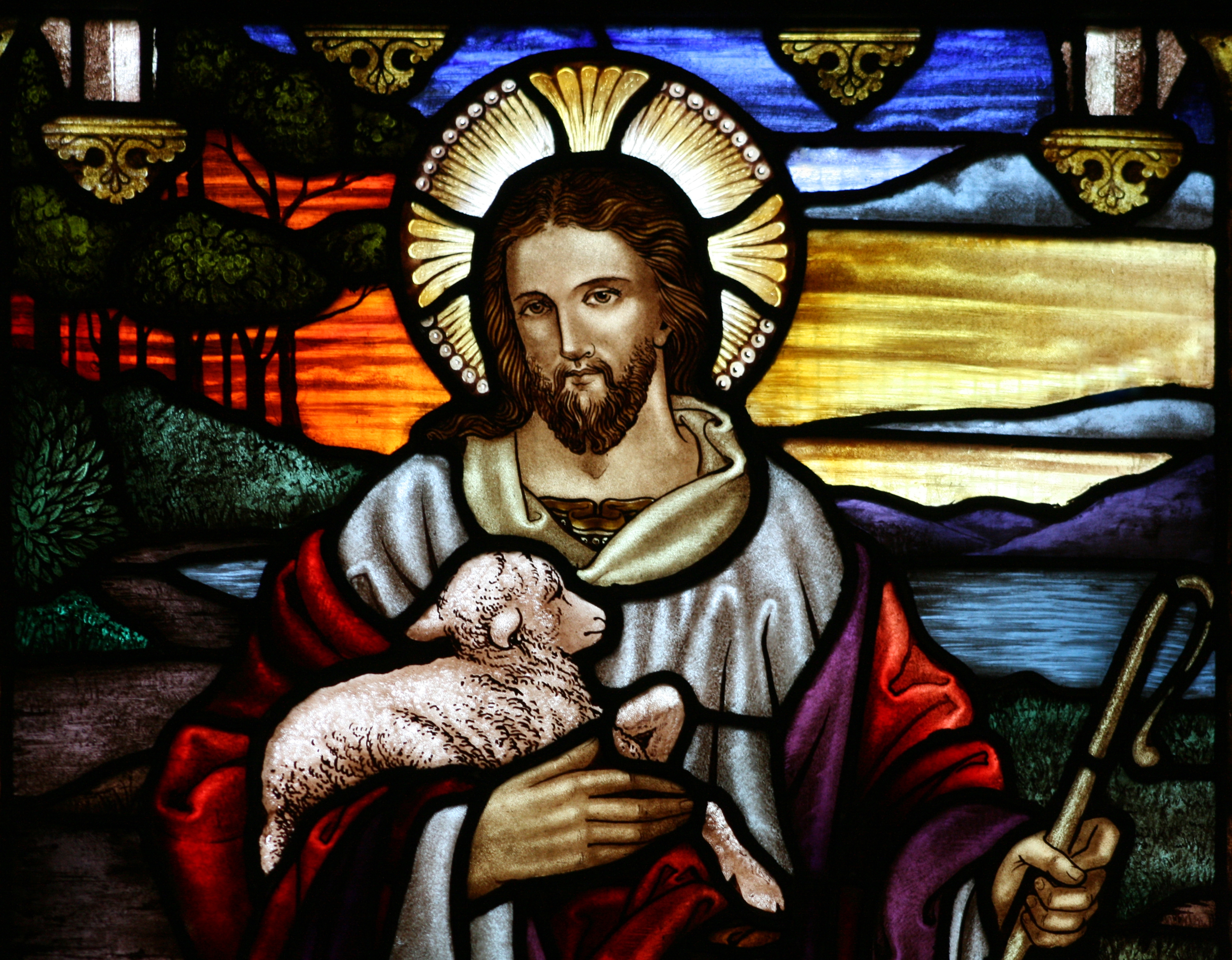
The only thing the shepherd is interested in is that the lost, confused, loner sheep has been found. So he bends down and gently picks up the sheep and carries it back on his shoulders ALL THE WAY back to the flock. Without complaining, without saying someone else will come get you, without plotting how the sheep will be blamed for making the shepherd go out of his way. The shepherd took the initiative and rejoiced the whole way back!

When he gets back with the rest of the flock, the shepherd throws a party–not for admiration of himself; but because the sheep is back! He throws the party for the sheep!

Imagine this: in all three of the parables there is an act of repentance. The sheep in this story could not repent of it’s own; but the very act of it allowing the shepherd to pick it up and carry it back to safety is a symbol of repentance because the sheep completely trusts the shepherd to care for it and lead it.

I’m sure sometime while the sheep was out, it thought (if sheep could think this way), “I’m lost and I am getting hungry and thirsty and I am all alone and scared. I don’t know the way back. I need help! Where is my guide? When the shepherd appears the sheep allows him to carry it. In essence, the sheep was saying, “I cannot do this on my own and I know now I should stay with you.”

God says through the prophet Ezekiel, “I myself will search for  my flock and seek them out. As a shepherd seeks out the flock when some in the flock have scattered, so will I seek out my flock. I will rescue them from all the places where they were scattered during the time of cloud and thick darkness….I will seek out the lost, bring back the strays, bind up the wounded, and strengthen the weak.” (Ezekiel 34:11-12;16a)

God is working in us and through us. He is constantly inviting us to participate in bringing more people into his flock and back into the flock. This is why we witness and share our faith.

Simple Steps (Sharing Our Faith) Part 1 of 4

This blog series is the sermon teaching how to share our faith in Jesus Christ easily and naturally. Sermon given by Ryan Stratton on Sunday, September 21, 2014.

The Scripture reference for this sermon is Luke 15:1-7

“When he was the pastor of the Methodist church in Scarborough, William Sangster had an eccentric member who tried to be a zealous Christian. Unfortunately, the man was socially inept and usually did the wrong thing. While working as a barber, the man lathered up a customer for a shave, came at him with the poised razor, and asked, ‘Are you prepared to meet your God?’ The frightened man fled with the lather on his face!” (Wiersbe, Warren. Wycliff Handbook of Preaching and Preachers)

Warren Wiersbe paints this story of how some people try to be “creative” in their evangelistic and witnessing methods.

We all know the saying attributed to St. Francis of Assisi, “Preach the Gospel at all times and if necessary, use words.” This is absolutely true since our lives are to represent the good news of Jesus Christ: by how we move, how we speak (how do we speak to those who serve us), how we interact with others (peaceful or downgrading or demeaning), by our actions (actions really do speak louder than words). But there comes a time when we must speak and use our words to convey the hope we have in Jesus Christ.

1 Peter 3:15 (CEB) “Whenever anyone asks you to speak of your hope, be ready to defend it.”

1 Timothy 2:4 (CEB) “God wants all people to be saved AND to come to a knowledge of the truth.”

Today’s story of the lost sheep, in Luke 15, will be our guide to see why we should bear witness to our faith and how we should go about it so we can follow our Shepherd, Jesus Christ.

First, we’ll talk discuss this story–hopefully shedding new light on it–then we’ll explore how this relates to our everyday lives and finally see what God may have to say to us about sharing our faith.

This is really an interesting chapter since it consists only of 3 parables that Jesus taught: the lost sheep, the lost coin, the lost son. If we pay attention, we’ll see some interesting points to consider that we could easily overlook. First of all there are 100 sheep; then there are 10 coins; then there is 1 son. Jesus is funneling down the numbers to show us what is important.

As the Pharisees were listening to these stories, can’t you just imagine them trying to figure out why these stories were being told and how they are applicable to them?

The similarities in each of these stories is simply this: something is lost and then it becomes found. Isn’t that true of us here and our friends and family who do not know or believe in Jesus Christ did not realize we were lost and searching for God; but all of this time God is actively seeking out his flock–and he uses people like you and me.

More important than this, we see the owner, the leader, the parent who is concerned and searches (sometimes through the situations themselves) for the lost item, animal, person AND THEN rejoices and throws a party because what once was lost is now found!

This chapter starts off with the Scribes and the Pharisees chastising Jesus for socializing with sinners (people “beneath” them). But Jesus welcomed and still welcomes anyone and everyone who will listen and follow.

We always have people that will say negative things about us or make fun of us for whatever reason. Most of the time it is because those making fun of us do not really understand what is really going on.

Jesus did not let their comments bother or deter him from doing what he thought he should be doing. He just keeps on doing what he knows is the right thing to do: reach out to show and tell ALL PEOPLE HE CAN about God’s unconditional love to ALL. So he begins with a parable about a shepherd and his sheep.

Real Strength

One of the traits I have observed people attempting to show is being a “strong man” or “strong woman.” I believe it is important to be a strong person; however, it also seems that people may have somewhat of a wrong idea about what it means to be strong. These are some qualities that may provide some idea that show true strength (emotional, mental, social, etc). I invite you to study this list and see if something should be taken off or added.

A “strong man” or “strong woman” should:

  • be compassionate toward others
  • be able to listen
  • realize there are things we can learn from anyone
  • be able to learn from other people
  • not think anyone is beneath them
  • be the most loving person (without allowing others to “run over them”)

These are just some of the qualities and traits of strong people. What else would you add?

The Purpose of Our Gifts

Each one of us has been given certain gifts. We can call these talents or natural abilities. What we call them doesn’t matter as long as we can understand why we have been given these gifts/abilities and how we can humbly live with them and continue to learn about and develop these gifts.

This video message talks about why we have been given the gifts/abilities we have and what purpose they serve. Ryan delivers this message for our Saturday evening worship at Buda UMC. All people are invited and welcome to attend worship with us each week. www.budaumc.org

The scripture reference for this 25 minute message is 1 Corinthians 12.

May God strengthen each one of us as we joyfully proclaim Jesus Christ to a world in desperate need of Him.

Lord, I

How many of us have started our prayers with, “Lord, I…” and precede to tell God everything we want God to do for us? Last week, as I was praying, I noticed the prayer started with, “Lord, I…” Yes there were legitimate things I was praying about; but I asked myself, “how does this phrase really place God in my life?”

This was a hard question to think about because I realized that whether I knew it or not, there were times when I doubted God’s faithfulness, or sometimes it seemed that my faithfulness to God depended on how much God gave me.” The truth of it is, people’s faithfulness sometimes depends on circumstances and how much they get. God’s faithfulness depends on his devotion to you.

I’m not sure where you are today, or what you are going through. I can promise you that God’s faithfulness to you and to me goes way beyond understanding. In fact, God proved his love and faithfulness to us on the cross when Jesus Christ hung there for our sins. With this in mind, we can look at this verse from Luke, “If you who are evil know how to give good gifts to your children, how much more will the heavenly Father give the Holy Spirit to those who ask him?” (Luke 11:13 CEB)

How is your personal prayer life? What kinds of things do you pray for? The disciples only questions they asked Jesus to teach them about was, “Lord, teach us to pray.” (Luke 11:1)

Because we have a high priest in heaven right now (Jesus Christ), we have a constant intercessor for us. Jesus prays for each one of you and for me. (Hebrews 7)

So, as I continued to pray, I felt in my heart the prayer begin to change. No longer was it, “Lord, I want…” or “Lord, I want you to…” or “Lord, please help or be with…”. The prayer focus became more about the relationship I have with God through Jesus Christ. The prayer became, “Lord, You…”

Lord, You are the giver of all good gifts.
You are the source of life.
You provide my needs.
You are with those who need you.
You are my rock and my strength, a very present help in times of trouble.
Lord, You are faithful to me, even when my faithfulness to you runs dry and disbelief and unbelief seep into my thoughts.
Thank You!
Thank You, Lord!
It is amazing what is done in the power You have provided.

May our prayers and prayer life give God the glory and keep him in the right place in our hearts.

IMG_2564.JPG