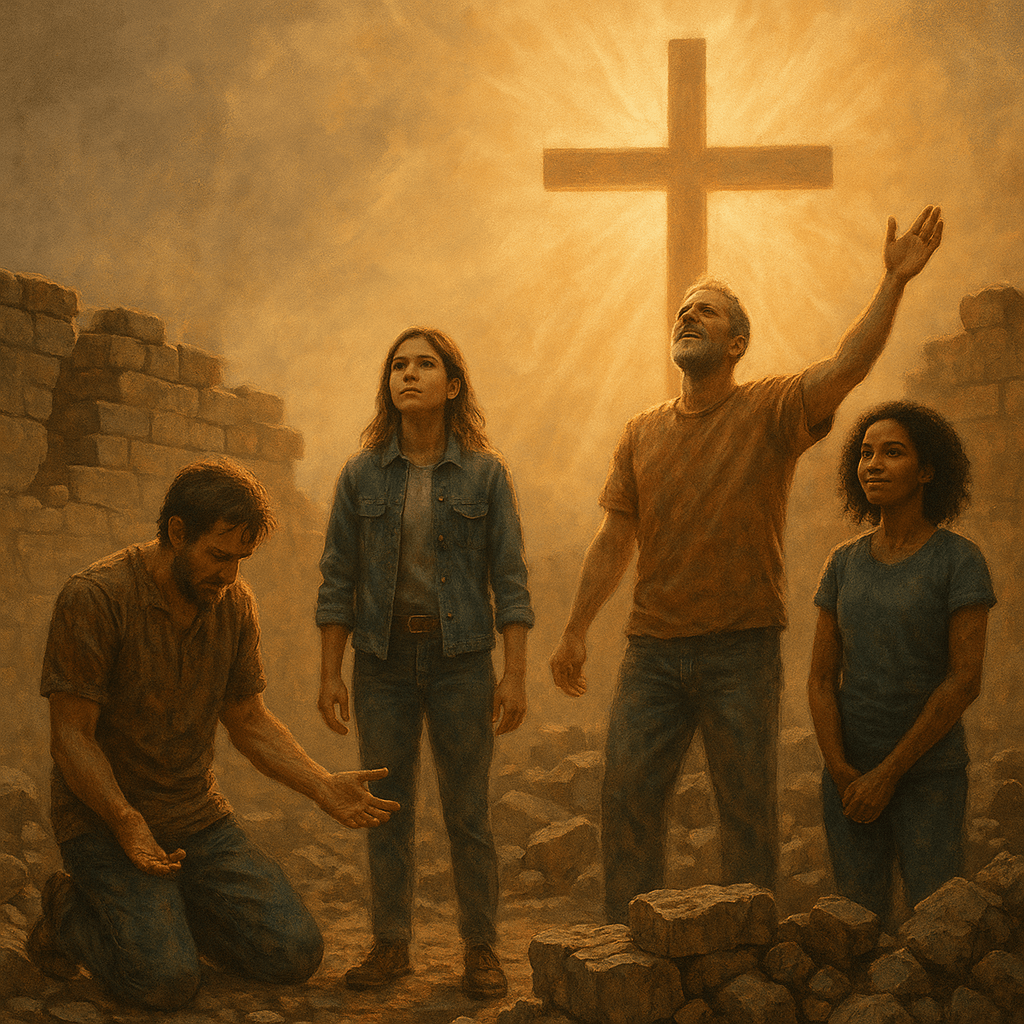
Conversion (Acts 9)

This week, we turn to a well-known passage: the conversion of Saul (whom we know as Paul).

What should we do when we come across familiar scriptures? We should step back and attempt to read or listen to them from a fresh perspective—as if encountering them for the first time.

Why? Because every time we engage with Scripture, it should transform us.

That brings us to our word of the day: Conversion.

One scholar writes,

“Conversion is the beginning of the Christian journey, not its final destination… Conversion is not for the smug individual possession of the convert, but rather for the ongoing thrust of the gospel… God is the chief actor in all Lukan accounts of conversion.”

Conversion is God’s work in our lives—constantly transforming us into His likeness through Jesus Christ. But let’s be clear: conversion does not mean everything will suddenly become easy.

Take Saul (Paul), for example. He spent years proving that Jesus was at work in his life. His transformation had a profound impact on those around him.

Today, let’s look at this story through a different lens—the perspective of one of Saul’s traveling companions as they journeyed toward Damascus.

____________________________________________________

Through the Eyes of One of Saul’s Companions

“We had just received the letters from the high priest. Saul was still burning with rage against these people who followed Jesus. But something about him had changed since Stephen’s stoning.

We knew exactly what we were looking for—those who belonged to the Way. We knew exactly where to find them. How dare these people claim Judaism was wrong? How dare they say that a dead man was alive? They had to be stopped before they convinced everyone.

I will admit, though—something about these Jesus-followers was different. Their lives were transformed. But how could someone who wasn’t even here anymore have that kind of influence? Couldn’t they see the chaos they were causing by speaking about Jesus? Our cities were being turned upside down!

Order had to be restored. That was our mission.

We had heard about synagogues and houses in Damascus where people were worshipping Jesus. We knew exactly where to go. And with the high priest’s letters in hand, we had the authority to carry out our mission. That gave me confidence—we weren’t acting alone. We had the law on our side.

The road to Damascus stretched before us. We had been walking for some time, discussing what we would do once we found these people. We were ready.

Then, out of nowhere—a blinding light!

There was something different about this light. Saul dropped to the ground. We froze. None of us knew what was happening.

We tried to move closer, but something held us back. We tried to speak to Saul, but he wasn’t listening to us. Instead, we heard him cry out, “Who are you, Lord?”

This was strange. We saw nothing in the light, but there were sounds—words spoken—but we couldn’t make out what was being said.

And then, just as quickly as it came, the light was gone.

Saul was still on the ground. He was panicked—he kept saying he was blind.

We helped him up, and he was grateful we were still there. But something about him had changed. He was different. We couldn’t explain it, but we felt it.

He insisted that we continue to Damascus. We were still on a mission, after all. But something else had shifted—Saul kept talking about someone named Ananias. We knew him—he was one of the followers of the Way. We were ready to arrest him.

But then Saul said something we never expected.

“I must go to Ananias,” he told us. “He will pray for me, and I will receive my sight again.”

What?

We were confused. But Saul was still our leader, so we followed his orders.

When we arrived in Damascus, we waited outside as Saul entered Ananias’ house. We watched as Ananias cautiously checked his surroundings, making sure no one saw Saul enter. And then, we waited.

After some time, Saul emerged.

His sight had returned.

But it wasn’t just his eyes that had changed—he had changed.

“Jesus is the true Messiah,” Saul told us. “He is the one I encountered in that great light. He is alive.”

Our leader—Saul, the devoted Pharisee—was now proclaiming Jesus.

_________________________________________________________

How Do We Know When Someone Has Been Converted?

Have you ever considered what Saul’s companions experienced? They witnessed something life-altering, even if they didn’t fully understand it.

So how do we recognize when someone has had a true conversion experience?

Some say conversion happens the moment we believe in Jesus. While belief is part of it, conversion is a process, not a single moment.

Look at the text:

Saul encountered Jesus on the road.

From that moment, he believed Jesus was the Messiah.

But his transformation continued in Damascus—through Ananias, through prayer, through baptism.

What experience led you to believe that Jesus is the rightful King?

But Saul wasn’t the only one who needed conversion.

Ananias had to be converted—from fear and prejudice to obedience and trust.

Saul’s companions were confronted with something beyond their understanding.

Saul himself had to move from being a Pharisee and persecutor to becoming a follower and missionary of Jesus.

Conversion isn’t just about a moment—it’s about what happens next.

Encountering the Presence of Christ

Friends, this is what happens when we truly experience Jesus.

His Holy Spirit breathes new life into us.

We become part of His family.

We become part of His mission.

The Spirit convicts. The Spirit transforms. The Spirit calls us to something greater.

So here’s the question:

How will you respond when the Holy Spirit convicts you?

Will you say, “Yes, Lord, my King, I will follow You completely!”

Or will you respond with indifference, thinking you already know enough?

This is one of the reasons I love going to the mountains. There is a majesty in that setting that I cannot escape—a presence that pulls me into an experience with God. Every time, I walk away different. There have been moments when I have been stopped in my tracks, confronted by the Spirit, and challenged to grow in faith.

So what about you?

What if, as you walk out these doors today, the Holy Spirit stops you in your tracks?

What if He is speaking to you, calling you to something deeper?

Are you ready to experience the presence and power of the Spirit?

Are you ready to be changed?

DISCUSSION QUESTIONS: (You can also ask your own questions or begin a discussion starter)

  • What stands out to you in this scripture? In other words, what is the Holy Spirit impressing on you to notice?
  • What did the early church/apostles do in this scripture? How do you see Jesus working in this picture? How can you translate this for today?
  • How is our church mission and culture the same from the early church mission and culture? How is it different?
  • What challenges you in this scripture? Why? How might the Spirit be leading you?
  • Take time to pray about what the Spirit is leading you to do. Are you being led to do something within or through this church because of the Spirit’s word in this scripture? What would that look like? How could you begin?
  • What can you do, today, to be more in tune with the Spirit’s leading in this passage?

HOMEWORK: CONTINUE TO WORK THROUGH THE “TRANSFORMATION 1:8” BOOK CHALLENGE

United with Christ (Acts 2)

As we continue our journey through the Book of Acts, remember this: a small beginning—a small group of believers—eventually transformed the entire world. Think of the Mississippi River. It starts as a modest stream but grows into a mighty, unstoppable force.

When we look back at the early Church in biblical times, it’s easy to feel envious. Miracles were happening everywhere. Thousands of people joined the movement of Christ at once. Evangelism might have seemed effortless.

But was it really?

What We Often Miss

There’s something crucial about the early Church that we can easily overlook—something we often miss today as well.

What is it? Complete devotion to Jesus and His teachings. A faith that was not compromised to fit the culture. They didn’t just speak about truth—they lived it out.

And what was the result?

Jesus, through the Holy Spirit, brought unity and growth.

The Obsession with Growth

Today, we often become so obsessed with growth that we try to force things to happen on our own. When things don’t go the way we expect, we get discouraged. So, we turn to programs, events, and entertainment to draw people in.

These methods may attract a crowd, but true transformation doesn’t come from entertainment—it comes from unwavering faithfulness to the truth.

Faithfulness Brings Power

Here’s something we all need to hear:

When we remain faithful to the truth—without compromise—we will witness incredible signs and wonders. When the Church (both individually and collectively) refuses to water down the gospel to “fit” the world’s expectations, Jesus Christ will reveal His power and bring the results.

What is the result?

“The Lord added to their number daily those who were being saved.” (Acts 2:47)

The growth of the Church is Christ’s work, not ours. We are not responsible for producing results—we are called to be faithful and obedient. As we walk in obedience, we will see the Holy Spirit move.

The Role of the Holy Spirit

Look at this passage—what does the Holy Spirit bring to the believers?

Unity.

But let’s clarify something: unity is not the same as uniformity.

We don’t have to do everything the same way. One of the most beautiful aspects of the Spirit’s work is that He does not create “cookie-cutter” believers.

Scripture repeatedly tells us that the Holy Spirit gives unique gifts to different people (Ephesians 4, 1 Corinthians 12, Romans 12). This means that while not everyone will act or serve in the same way, we are united in mission and in Gospel truth.

Our unity in mission—not uniformity in method—is essential.

A Picture of True Unity

When we stay focused on Jesus, unexpected things happen.

We see a diverse group of people working together to make the hope of God’s kingdom a reality.

The Church is called to be a living example of what it means to dwell in God’s presence.

How?

Through our lives, we demonstrate complete devotion to Jesus Christ.

The Church is both physical and spiritual:

It is physical because we proclaim the Gospel, celebrate communion, and worship together.

It is spiritual because we remain in constant communication with God through prayer and unity with Christ and His people.

What This Means for Us Today

So what does this have to do with us?

We are invited to examine our faith and ask God to show us where we are out of alignment with Him.

We must ask:

How has the Holy Spirit gifted us?

How has the Spirit called us to be faithful in our specific community?

Instead of trying to replicate what other churches are doing, we must remain faithful to our unique calling in our community.

And here’s a crucial truth:

We don’t need to try to attract people.

Jesus is beautiful and attractive enough.

Our job is to pay attention to the work of the Holy Spirit. When we do, we will see true transformation and genuine growth—not manufactured results.

The Power of Faithful Witness

The early Church was not focused on performance. Their worship was not about putting on a show. They were patient, allowing the Gospel to shape their lives. They applied its truth in their relationships, workplaces, and everyday encounters.

And what happened?

Outsiders noticed the transformation.

People began to wonder, What do they have that I don’t?

Rumors spread about their gatherings, and misunderstandings arose. Yet, despite gossip and opposition, believers remained united in the Gospel, trusting the Spirit to bring transformation.

A Church Set Apart

When we remain focused on the Gospel and unified in Christ, something powerful happens:

The world sees that the Church is different.

We show the world what it looks like when God brings people together—how He breaks barriers, heals divisions, and reveals His presence through the Holy Spirit.

A Question to Consider

If we are not witnessing the Spirit’s movement like we hope, we must ask ourselves:

Are we truly seeking the Holy Spirit?

Or are we looking for something else to entertain us?

Have we made church about human desires instead of God’s presence?

The Point of It All

The Spirit of God is at work—bringing people to the truth of the Gospel, convicting hearts, leading people to repentance, and drawing them into His kingdom.

If we remain faithful to the truth, we will witness Jesus Christ revealing Himself through unity and growth.

DISCUSSION QUESTIONS: (You can also ask your own questions or begin a discussion starter)

  • What stands out to you in this scripture? In other words, what is the Holy Spirit impressing on you to notice?
  • What did the early church/apostles do in this scripture? How do you see Jesus working in this picture? How can you translate this for today?
  • How is our church mission and culture the same from the early church mission and culture? How is it different?
  • What challenges you in this scripture? Why? How might the Spirit be leading you?
  • Take time to pray about what the Spirit is leading you to do. Are you being led to do something within or through this church because of the Spirit’s word in this scripture? What would that look like? How could you begin?
  • What can you do, today, to be more in tune with the Spirit’s leading in this passage?

HOMEWORK: CONTINUE TO WORK THROUGH THE “TRANSFORMATION 1:8” BOOK CHALLENGE

Timing (Acts 1)

Everything starts small. It takes something seemingly insignificant to spark a movement that can change the world.

Have you ever seen the headwaters of the Mississippi River? At first glance, it’s unimpressive—a small, quiet stream. But over time, through movement and force, it grows into one of the most powerful rivers in the world.

The Book of Acts paints a similar picture of the early Church. It begins with a small group gathering together, but through the unstoppable power of the Holy Spirit, a movement is unleashed that changes the world.

The Action-Packed Story of Acts

Acts has just about everything—except dinosaurs! Think about it: earthquakes, shipwrecks, avenging angels, daring escapes, riots, murder plots, political intrigue, and courtroom drama. Who needs soap operas or court shows when Acts has it all?

Today, we begin a series on the movement of the Holy Spirit in the early Church by exploring the narrative of Acts.

Written between 70 and 80 AD, Acts tells the story of the Church’s explosive growth. The book’s outline is found in Acts 1:8:

“But you will receive power when the Holy Spirit comes on you; and you will be my witnesses in Jerusalem, and in all Judea and Samaria, and to the ends of the earth.” (Acts 1:8, NIV)

The story unfolds just as Jesus said:

The message starts in Jerusalem,

Spreads to Judea and Samaria,

And ultimately reaches the ends of the known world (Rome).

This happens through the power of the Holy Spirit. Because of this, Acts could be more accurately titled The Acts of the Holy Spirit or even The Acts of the Risen and Ascended Lord.

When reading Acts, remember it is a continuation of the Gospel of Luke, showing how believers began faithfully living out their discipleship in everyday life.

Throughout this series, we will explore:

  • How Christians can live in a world with differing theological views.
  • The purpose of the Church.
  • The meaning of salvation.
  • How we are called to care for others.
  • And more.

Acts 1: The Theme of Timing

Acts 1 sets the stage by introducing key themes:

  • The promise of the Holy Spirit.
  • Waiting for God’s timing.
  • The mission of Jesus.
  • His ascension.
  • The selection of a new apostle to replace Judas.

There is so much to unpack in this one chapter, but today, we will focus on a single, overarching theme: timing.

Have you ever heard this joke?

What’s the hardest part of telling a joke? Timing.

One of our greatest struggles is wanting to know what’s coming next—what to do, when to act, and how things will turn out. Let’s be honest: how many of us enjoy waiting? We want things immediately—yesterday, even. We live in a constant state of impatience.

I know this is something I struggle with. My son, Solomon, loves to remind me of a joke I tell—how I get impatient at McDonald’s while waiting for my own drink…and I’m the one pouring it!

The Faith to Wait

Here’s the truth:

The life of faith is forged in the fires of patience.

Faith grows when we wrestle with ideas and new ways of living. It becomes deeply rooted in us when we take the time to let it sink into our daily lives.

This past summer, I participated in a Bible reading challenge, which I loved. After finishing a 40-day devotional (available on Facebook and soon to be published), I felt called to approach my devotional time differently.

I have always been someone who likes to start and finish projects quickly. But now, I am doing something that will take years to complete—and I need to be okay with that.

What have I started?

I’ve begun handwriting the Bible. Each day, I spend 15-30 minutes copying Scripture (from the NIV), moving at a much slower pace than I’m used to. Yet, I’ve noticed words, phrases, and repetitions I had never seen before. It has been an incredible experience, and I pray I will see this project through.

Why do I share this?

To brag? No.

I share this because Jesus always calls His disciples to wait.

He calls us to seek His will in everything. Our plans only succeed when we take time to discern what Jesus is saying—what we should do and how we should do it.

Learning to Wait on God

Notice how Jesus rebuked the disciples in Acts 1:6-7. They were focused on when things would happen, but Jesus essentially told them, You’re not ready yet. When the time comes, you will be.

Can you imagine that? After hearing all these exciting things about what Jesus was leading them to do, He says…wait.

Put this in today’s context—how many of us would be willing to do what Jesus asks if the first step is waiting?

Instead of rushing ahead, we are called to:

Spend time in prayer.

Discern the right timing and action together.

Trust that Jesus will reveal what we need when we need it.

Even though we might want to take action immediately, faith requires us to stay—to meditate on what has been revealed so far, trusting that God will provide direction in His perfect time.

The Role of the Holy Spirit

The disciples didn’t move forward alone. The Holy Spirit—often the most neglected person of the Trinity—was sent to empower them.

The Holy Spirit is the one who:

Sanctifies us—making us whole and holy.

Convicts us of truth.

Comforts us in trials.

Guides us in God’s ways through Scripture.

But for us to experience this, we must take time to seek the Spirit’s presence and power.

Our Mission

What is our mission as followers of Christ?

Paul lays it out in 1 Timothy 2:1-4:

“I urge, then, first of all, that petitions, prayers, intercession, and thanksgiving be made for all people—for kings and all those in authority, that we may live peaceful and quiet lives in all godliness and holiness. This is good, and pleases God our Savior, who wants all people to be saved and to come to a knowledge of the truth.”

Jesus commands it in Matthew 28:19-20:

“Therefore go and make disciples of all nations, baptizing them in the name of the Father and of the Son and of the Holy Spirit, and teaching them to obey everything I have commanded you.”

And we follow Jesus’ own mission in Luke 19:10:

“For the Son of Man came to seek and to save the lost.”

At times, this mission may seem impossible. And for us, it is. But through the empowerment of the Holy Spirit, what God plans for, God provides for.

An Invitation to Trust God’s Timing

This week, I invite you to be present to the presence of the Holy Spirit.

Identify areas where you struggle with impatience.

Ask God to help you trust His timing.

Wrestle with what it means to wait on Him.

Prayer and waiting may seem small, but when we seek God’s will, we will see Him move in mighty ways.

How are you at waiting?

Are you truly trusting God’s timing?

Or are you trying to force things to happen on your own terms?

DISCUSSION QUESTIONS: (You can also ask your own questions or begin a discussion starter)

  • What stands out to you in this scripture? In other words, what is the Holy Spirit impressing on you to notice?
  • What did the early church/apostles do in this scripture? How do you see Jesus working in this picture? How can you translate this for today?
  • How is our church mission and culture the same from the early church mission and culture? How is it different?
  • What challenges you in this scripture? Why? How might the Spirit be leading you?
  • Take time to pray about what the Spirit is leading you to do. Are you being led to do something within or through this church because of the Spirit’s word in this scripture? What would that look like? How could you begin?
  • What can you do, today, to be more in tune with the Spirit’s leading in this passage?

HOMEWORK: BEGIN TO WORK IN THE “TRANSFORMATION 1:8” BOOK CHALLENGE

Our Mission: Making the Unknown Known (Acts 17:16-28)

We all find ourselves in these places—the places of endless debate. You know, the ones where nothing truly significant gets accomplished, yet people act as if they have everything figured out.

That is precisely where we find ourselves in this passage: the Areopagus, a gathering place akin to a city council. By the time Paul arrived, it had become a meeting ground for philosophers—thinkers who spent their days discussing and debating ideas.

Among them were two main groups:

The Epicureans—They believed everything happened by chance, death was the end of all things, and the gods were distant, uninvolved, and indifferent. Their highest aim was pleasure.

The Stoics—They believed that everything was divine, that all events were governed by fate, and that history endlessly repeated itself in cycles of destruction and renewal.

These were the intellectual elite, the place to hear the most exciting ideas about the world and how to live in it. They prided themselves on their wisdom—yet they had no way of making “the other side” agree with them.

The Problem with False Religion

This situation reveals something crucial: intellect alone has never eliminated false religion. These people were worshipping what they liked, building altars to their desires and fears alike.

The truth is, we do the same today. We worship—meaning we give excessive time, attention, and resources—to the things and people that bring us pleasure. At the same time, we also worship what we fear, doing anything to keep uncertainty and hardship at bay.

Then, Paul enters the scene, and the Holy Spirit begins to move.

Paul’s Calling and Mission

Remember Paul’s calling in Acts 9:

“But the Lord said to Ananias, ‘Go! This man is my chosen instrument to proclaim my name to the Gentiles and their kings and to the people of Israel. I will show him how much he must suffer for my name.’”

Paul was handpicked by God to proclaim the Gospel to the Gentiles and their rulers. Despite beatings, imprisonments, and slander, Paul remained steadfast in his mission.

As he walked through Athens, he was deeply distressed by what he saw—altars everywhere, each one dedicated to a different god. The people were desperate to cover all their bases, ensuring their lives remained easy and their gods appeased.

The Altar to the Unknown God

As Paul searched the city, even entering the Temple of Athena, one altar caught his eye—an altar to an unknown god. This intrigued him. The Athenians thought they had accounted for every deity, but just in case they had missed one, they erected this altar as a safeguard.

It may seem strange, but is it really so different from what we do today?

Modern Idolatry

Walking through a Walmart, I see idols and gods everywhere—things tempting and enticing people to pour their money, time, and devotion into them.

  • The god of Tylenol—offering relief at any cost.
  • The god of Coca-Cola—promising comfort in a bottle.
  • The god of Blue Bell—demanding indulgence.
  • The god of entertainment and fashion—shaping identities.
  • The god of food—consuming rather than nourishing.

And in the midst of all this, I see images of the God—yet no one is paying attention.

The same is true at football stadiums:

  • The god of the end zone.
  • The god of children’s success.
  • The god of “Football is life.”

People pour their money, energy, and passion into these things, while the Spirit grieves that so few acknowledge the true God.

But most troubling of all, I see this in the church:

  • The god of music.
  • The god of carpet color.
  • The god of furniture placement.
  • The god of status symbols.
  • The god of the preacher’s sermon.

Worship becomes centered on personal preferences rather than surrendering to the living God.

Why Do We Worship These Things?

Because they are controllable. We like gods that we can manipulate, place where we want them, and make them serve our desires. We crave control, even in our faith.

Even as Christians, we fall into this trap. We say we trust God, yet we cling to control, forcing things to happen in our own way and timing. If things don’t go as planned, we blame others, circumstances, or even God Himself.

What Causes You Distress?

The Holy Spirit is constantly at work, opening our eyes to what should distress us. But often, our frustrations are misplaced:

  • The plane didn’t arrive on time.
  • The restaurant got our order wrong.
  • Someone took our parking spot.
  • Our team lost the game.

We pour our emotions into these trivial matters, yet when it comes to worship and serving Christ, we are emotionally drained. We have conditioned ourselves to watch worship rather than participate in it.

Think about the way we speak:

  • “My football team.”
  • “My baseball team.”
  • But when it comes to church? “The preacher’s sermon,” “The music that day.”

We subtly shift our focus away from worshiping God to making worship about us.

The Athenians and the Unknown God

The Athenians weren’t opposed to adding new gods, but they had rules:

  • The sponsor must claim to represent a deity.
  • The sponsor must provide evidence that the deity is willing to reside in Athens.
  • The deity’s presence must benefit Athenian life.

Paul met these conditions:

Verses 22-23 – He established himself as a proper herald of Jesus.

Verses 24-29 – He declared that the living God is not confined to temples or religious rituals.

Verses 30-31 – He proclaimed that Jesus seeks the lost, calls for repentance, and has been resurrected—offering hope rather than fear.

As Paul spoke, many Athenians were intrigued and began to follow him, eager to learn more about Jesus Christ.

Our Call Today

We find ourselves in the same position as Paul. We walk through:

  • Walmart.
  • Grocery stores.
  • Movie theaters.
  • Sports fields.
  • Churches.

And everywhere, we see people worshipping lesser gods. They may not realize it, but they carry symbols of the God—the cross, a representation of Christ—without truly knowing Him.

Even as believers, we sometimes miss the opportunity to know God personally. But the Holy Spirit offers us a fresh wind and fire. We are called to proclaim with boldness, joy, and courage that Jesus Christ is Risen!

This is not just a remembrance of what He did. It is a call to live in the reality that He lives.

Will We Be Bold?

Are we strong enough in Christ to do what He asks? Not everyone will receive the message of Jesus, but we remain steadfast, partnering with the Holy Spirit as we go into the world.

People came to faith because Paul was obedient to the Spirit’s call.

May we be just as bold in our faith—proclaiming Christ, encountering Him, and inviting the world to truly know the unknown God.

BEGINNING QUESTIONS: 

What are your thoughts about this scripture/sermon? 

What are you looking forward to as we begin this journey through Acts?

What might the Spirit be speaking to you as you begin this journey through the book of Acts?

How to work through this study of Acts

Each week begins with a sermon or reflection on the week’s scripture, written by Ryan, to help guide your thoughts and deepen your understanding. These sermons serve as starting points for discussion and reflection on the passage.

You are also encouraged to explore the discussion questions that follow each sermon. While the questions remain the same each week, your answers and conversations will evolve as you engage with the scripture in new ways.Additionally, there is a companion resource titled Transformation 1:8, located in the appendix. This discipleship challenge book is designed to help you explore what it means to live as a disciple of Christ in today’s world. I encourage you to take the time to engage with this resource and discover how it can transform both your personal faith and your communal walk with Christ.

Easter Sermon: Video Message of Hope

Check out this video sermon to hear the Easter message:

Holy Week: A Journey of Reflection and Renewal

Holy Week is the most sacred and significant time in the Christian calendar, marking the final days of Jesus’ earthly ministry, His suffering, death, and ultimate triumph over sin and death through His resurrection. This week invites believers to reflect deeply on the love, sacrifice, and victory of Christ as we prepare our hearts to celebrate Easter.

The Main Days of Holy Week We Celebrate

                  1.             Palm Sunday: The Triumphal Entry

Holy Week begins with Palm Sunday, the day Jesus entered Jerusalem riding on a donkey while crowds hailed Him as King, shouting, “Hosanna! Blessed is He who comes in the name of the Lord!” (John 12:13). This moment fulfilled the prophecy in Zechariah 9:9, symbolizing Jesus’ humility and kingship. Palm Sunday reminds us to welcome Jesus as the King of our hearts while recognizing the kind of Savior He came to be—one who saves through sacrifice, not conquest.

                  2.             Maundy Thursday: The Last Supper

Maundy Thursday commemorates the night Jesus shared the Passover meal with His disciples, instituting the Lord’s Supper (Matthew 26:26-28). Jesus washed His disciples’ feet, modeling servant leadership, and gave a new commandment: “Love one another as I have loved you” (John 13:34). This day reminds us of Christ’s selfless love and calls us to serve others with humility.

                  3.             Good Friday: The Crucifixion

Good Friday is a solemn day of reflection on the suffering and death of Jesus on the cross. Bearing the weight of humanity’s sin, Jesus willingly endured separation from the Father so we might be reconciled to God. As we meditate on His words, “It is finished” (John 19:30), we are reminded that His sacrifice paid the full price for our salvation. Good Friday invites us to confront the depth of our sin and the immeasurable cost of God’s grace.

                  4.             Holy Saturday: Waiting in Hope

Holy Saturday is a day of quiet reflection as we remember Jesus’ body lying in the tomb. For His followers, it was a day of grief and uncertainty, yet it also marked the beginning of God’s redemptive plan unfolding. Holy Saturday teaches us to trust in God’s promises, even in seasons of waiting and silence.

                  5.             Easter Sunday: The Resurrection

The week culminates in Easter Sunday, the day of Christ’s resurrection and victory over death (Luke 24:6). The empty tomb declares that sin and death no longer have the final word. Jesus’ resurrection is the foundation of our faith and the assurance of eternal life for all who believe. Easter is a celebration of hope, renewal, and the new life we have in Christ.

The Significance of Holy Week

Holy Week is not just a historical commemoration; it is an invitation to walk with Jesus through His final days, experiencing His love and sacrifice on a personal level. Each day offers an opportunity to deepen our faith and gratitude for the redemption Jesus secured for us.

As we journey through Holy Week, we are reminded that the story does not end in sorrow but in the triumph of resurrection. Jesus’ victory over sin and death offers us hope, freedom, and eternal life.

Reflecting on the Cross and the Empty Tomb

Holy Week challenges us to remember the cost of our salvation and to live in response to the grace we have received. It calls us to die to ourselves, take up our cross daily (Luke 9:23), and walk in the resurrection power of Christ.

May this Holy Week draw us closer to Jesus as we remember His love, reflect on His sacrifice, and rejoice in His victory.

“But God demonstrates His own love for us in this: While we were still sinners, Christ died for us.” —Romans 5:8

Understanding Confession: A Path to Renewal

In the Christian walk, confession and repentance are foundational aspects of our faith. Yet, in a culture that seeks instant results and quick fixes, the idea of a gradual, disciplined process can be difficult to embrace. Confession is not merely about admitting our sins, and repentance is not a one-time act. Together, they form a transformative journey—one that requires patience, discipline, and a deep trust in God’s power to recreate us.

The Power of Confession

Confession is the first step in acknowledging our need for God. It is an act of humility, where we come before Him with open hearts, laying bare our sins and shortcomings. In 1 John 1:9, we are reminded of the promise: “If we confess our sins, He is faithful and just to forgive us our sins and to cleanse us from all unrighteousness.”

Confession is not for God’s benefit—He already knows everything. Rather, it is for us. It brings our sin out of the shadows and into the light, breaking the chains of guilt and shame. It is the first step toward healing and restoration. Through confession, we declare our dependence on God’s mercy and grace, inviting Him to begin His work in us.

Repentance: A Process, Not an Event

While confession acknowledges sin, repentance is about turning away from it. But repentance is not an instantaneous transformation. It is a process that requires discipline, intentionality, and perseverance. In Acts 3:19, Peter urges us: “Repent, then, and turn to God, so that your sins may be wiped out, that times of refreshing may come from the Lord.”

True repentance involves a change of heart and mind. It is the daily decision to choose God’s ways over our own desires. This is not easy. Old habits and patterns often resist change, and the process can feel slow and frustrating. But it is in this very process that God’s grace becomes evident. Through the Holy Spirit, He strengthens us, convicts us, and shapes us into the image of Christ.

Discipline: The Framework of Transformation

Repentance requires discipline. Just as an athlete trains their body through consistent effort, we must train our hearts and minds to follow God. Spiritual disciplines such as prayer, studying Scripture, fasting, and worship create space for God to work in us. These practices help us to stay rooted in Him and resist the pull of sin.

Hebrews 12:11 reminds us, “No discipline seems pleasant at the time, but painful. Later on, however, it produces a harvest of righteousness and peace for those who have been trained by it.” Discipline is not about earning God’s love but about positioning ourselves to receive His transforming power. It is through discipline that we learn to align our lives with His will.

Patience in the Process

One of the greatest challenges in repentance is patience. We often expect immediate change, but transformation takes time. Philippians 1:6 offers encouragement: “Being confident of this, that He who began a good work in you will carry it on to completion until the day of Christ Jesus.”

God is not in a rush, and neither should we be. He is more concerned with the depth of our transformation than the speed of it. As we submit to His process, we learn to trust Him more fully. Every step, no matter how small, is a victory. Each moment of obedience draws us closer to the person God has called us to be.

Becoming a New Creation

Confession and repentance are tools God uses to recreate us. In 2 Corinthians 5:17, we are reminded: “Therefore, if anyone is in Christ, the new creation has come: The old has gone, the new is here!” This new creation is not a polished version of our old selves but a completely transformed being. Through confession, we are freed from the weight of sin. Through repentance, we are reshaped into vessels of righteousness.

Trusting God’s Timing

As we walk this journey, let us remember that transformation is God’s work in us. Our role is to remain faithful, disciplined, and patient. The road may be long, and there will be moments of failure. But even in our weakness, God’s strength is made perfect (2 Corinthians 12:9).

Confession and repentance are not just about avoiding sin but about becoming more like Christ. They are about surrendering to God’s work in our lives, trusting that He is faithful to complete what He has started. So, let us press on, confident in His promise, and patient in His process. God is not finished with us yet.

Prepare for Easter: The Urgency of Repentance

John the Baptist: A Call to Repentance and Renewal for Lent

The season of Lent is a time of reflection, repentance, and renewal. As we journey toward Easter, the call of John the Baptist rings loud and clear: “Repent, for the kingdom of heaven is at hand!” (Matthew 3:2). His message is not just a historical moment but a timeless invitation for every believer to examine their hearts, turn from sin, and prepare for the Lord’s work in their lives.

The Ministry of John the Baptist

John the Baptist’s role in Scripture was to prepare the way for the coming of Jesus Christ. He was a voice crying out in the wilderness, urging people to turn away from their sins and embrace a life aligned with God’s will. His baptism of repentance was a public act of humility and surrender, symbolizing a heart ready to receive the Messiah.

John’s bold and urgent message reminds us that repentance is not optional—it is essential. It is the doorway through which we experience God’s grace, forgiveness, and transformation.

Repentance: A Central Theme of Lent

Lent mirrors John’s call to repentance, providing a structured season for believers to take an honest look at their lives. It is a time to confront the ways we have fallen short and to realign our hearts with God’s purposes.

John’s message challenges us to recognize the seriousness of sin and the need for genuine change. His words to the Pharisees and Sadducees still echo today: “Bear fruit in keeping with repentance” (Matthew 3:8). True repentance is not just feeling sorry for our sins—it is a commitment to turn away from them and live differently.

Preparing the Way for the Lord

John’s mission was to prepare the way for Jesus. In the same way, Lent prepares our hearts for the celebration of Easter. By repenting and seeking God’s forgiveness, we clear away the obstacles that hinder our relationship with Him.

Just as John urged his audience to make straight paths for the Lord (Isaiah 40:3), Lent invites us to remove distractions, surrender our burdens, and open our hearts to the transforming work of Christ.

Lessons from John’s Message for Lent

                  1.             Humility Before God: John’s message begins with an acknowledgment of our need for God. Repentance requires humility—a willingness to admit our sins and recognize that we cannot save ourselves. Lent is an opportunity to come before God with contrite hearts, trusting in His mercy and grace.

                  2.             Urgency of Repentance: John’s call was urgent because the Messiah was near. Lent reminds us that life is fleeting, and there is no better time than now to turn to God. “Today, if you hear His voice, do not harden your hearts” (Hebrews 3:15).

                  3.             Bearing Fruit: Repentance is not just an internal change—it is visible in the way we live. During Lent, we are called to bear fruit through acts of love, generosity, forgiveness, and service to others, reflecting the transformation God is working within us.

                  4.             Pointing to Christ: John’s entire ministry was focused on pointing others to Jesus: “Behold, the Lamb of God, who takes away the sin of the world!” (John 1:29). Lent invites us to fix our eyes on Jesus, the source of our salvation, and to lead others to Him through our words and actions.

A Season of Renewal

The call of John the Baptist is a powerful reminder that repentance leads to renewal. As we prepare our hearts during Lent, we can take comfort in God’s promise: “If we confess our sins, He is faithful and just to forgive us our sins and to cleanse us from all unrighteousness” (1 John 1:9).

John’s message is not one of condemnation but of hope. It points us to the abundant life found in Jesus and the joy of walking in His ways.

Answering the Call

This Lent, may we heed John’s call to repentance, allowing God to cleanse and renew our hearts. Let us prepare the way for the Lord, making room for His grace, peace, and power to transform us. As we journey toward Easter, may our lives bear the fruit of true repentance, pointing others to the Savior who came to redeem us all.

“Repent, for the kingdom of heaven is at hand!” —Matthew 3:2

The Spiritual Benefits of Fasting During Lent

The season of Lent offers believers a sacred opportunity to draw closer to God through reflection, repentance, and renewal. Rooted in the 40 days Jesus spent fasting in the wilderness, Lent invites us to pause and make space for spiritual growth. One of the most meaningful ways to do this is through fasting.

Fasting, while often associated with abstaining from food, is about so much more than just refraining from meals. It is a spiritual practice that shifts our focus from earthly comforts to divine connection. Through fasting, we quiet the distractions of the world, making room to hear God’s voice more clearly and align our hearts with His will.

Why Fast During Lent?

Fasting is a biblical discipline modeled by Jesus, Moses, and others throughout scripture. It serves as a way to humble ourselves, confront our weaknesses, and depend more fully on God. In the context of Lent, fasting symbolizes a journey of repentance, surrender, and preparation for the celebration of Christ’s resurrection on Easter Sunday.

Joel 2:12-13 captures this beautifully:

“Even now declares the Lord, return to me with all your heart, with fasting and weeping and mourning. Rend your heart and not your garments. Return to the Lord your God, for he is gracious and compassionate, slow to anger and abounding in love.”

When we fast, we open our hearts to this return a spiritual reset that deepens our relationship with God.

How Fasting Fuels Spiritual Growth

1. Dependence on God: Fasting reveals how much we rely on worldly things for comfort and satisfaction. As we set these aside, we learn to rely more fully on God for strength and fulfillment.

2. Clarity and Focus: By removing distractions, fasting helps us discern God’s will more clearly. Prayer and scripture take on new meaning as we attune our hearts to His voice.

3. Renewed Gratitude: Abstaining from food or other comforts reminds us to be grateful for God’s provision. It fosters a spirit of humility and thankfulness.

4. Deeper Prayer Life: Fasting and prayer go hand in hand. When we fast, we can channel the time and energy we would normally spend on earthly pleasures into seeking God’s presence.

Fasting Beyond Food

While fasting from meals is a traditional Lenten practice, consider fasting from other things that may distract you from God. Social media, television, or other habits can also be meaningful sacrifices, helping you create space to focus on spiritual growth.

Practical Steps for Fasting During Lent

1. Pray for Guidance: Ask God to reveal what you should fast from and how He wants to use this season in your life.

2. Set Intentions: Define your goals for fasting whether its deepening your prayer life, seeking clarity, or simply drawing closer to God.

3. Pair Fasting with Prayer: Use the moments of hunger or longing as reminders to pray and seek God’s presence.

4. Reflect and Journal: Keep a journal to document what God is teaching you during Lent. Reflect on scripture and the ways He is shaping your heart.

A Heart of Renewal

As you fast and seek spiritual growth during Lent, remember that the goal isn’t just self-discipline it’s transformation. Let this be a time to realign your heart with God’s purposes, celebrating the grace and love He pours out in abundance.

May your Lenten journey draw you nearer to the heart of Christ and prepare you to rejoice fully in the hope of the resurrection.

Resisting Temptation: Insights for the Lenten Journey

The season of Lent invites Christians to reflect on their spiritual walk, turning their hearts toward God through repentance, fasting, prayer, and self-denial. Central to this 40-day journey is the account of Jesus’ temptations in the wilderness, a moment that not only reveals His strength and obedience but also provides believers with profound lessons for their own struggles.

The Wilderness: A Time of Testing and Preparation

In Matthew 4:1-11, Jesus is led by the Spirit into the wilderness, where He fasts for 40 days and nights. This period of isolation and testing comes immediately after His baptism, where He is declared the beloved Son of God. In the wilderness, Jesus faces three temptations from Satan, each designed to undermine His identity, mission, and trust in the Father.

The Temptations and Their Significance

                  1.             The Temptation of Bread: Physical Needs

Satan begins by tempting Jesus to turn stones into bread, appealing to His physical hunger after fasting. But Jesus responds, “Man shall not live by bread alone, but by every word that comes from the mouth of God” (Matthew 4:4).

This temptation challenges us to consider how we prioritize physical comfort and material needs over spiritual nourishment. During Lent, fasting becomes an act of surrender, reminding us that our true sustenance comes from God’s Word and presence.

                  2.             The Temptation of Power: Testing God’s Faithfulness

Next, Satan takes Jesus to the pinnacle of the temple and urges Him to throw Himself down, quoting Scripture to suggest that God will rescue Him. Jesus replies, “You shall not put the Lord your God to the test” (Matthew 4:7).

This temptation reveals the human tendency to demand signs and proof of God’s care, particularly in moments of doubt or suffering. Lent invites us to trust God’s faithfulness without manipulation, surrendering our need for control and yielding to His perfect will.

                  3.             The Temptation of Authority: Earthly Glory

Finally, Satan offers Jesus all the kingdoms of the world in exchange for worship. Jesus rebukes him, saying, “You shall worship the Lord your God and Him only shall you serve” (Matthew 4:10).

This temptation highlights the allure of earthly power, success, and self-exaltation. Lent reminds us to forsake worldly ambitions and worship God alone, aligning our lives with His kingdom purposes rather than pursuing fleeting glory.

Lessons for the Lenten Season

The account of Jesus’ temptations provides a blueprint for navigating our own wilderness experiences. Just as Jesus relied on Scripture and communion with the Father, we too can find strength in God’s Word and presence during Lent.

  1. Resisting Temptation: Jesus’ victory over temptation demonstrates that, through the power of the Holy Spirit, we can resist sin and live in obedience. Lent encourages us to confront the sins that hinder our relationship with God and seek His forgiveness and transformation.
  2. Identity in Christ: Satan’s temptations often attacked Jesus’ identity as the Son of God. Lent invites us to reaffirm our identity in Christ, knowing we are beloved children of God, secure in His grace and calling.
  3. Preparation for Mission: Just as the wilderness prepared Jesus for His public ministry, Lent prepares us for deeper intimacy with God and greater effectiveness in living out His mission in the world.

Finding Hope in the Wilderness

While the wilderness is a place of testing, it is also a place of divine encounter. Jesus’ victory over temptation assures us that He understands our struggles and walks with us in every trial. Hebrews 4:15-16 reminds us:

“For we do not have a high priest who is unable to sympathize with our weaknesses, but one who in every respect has been tempted as we are, yet without sin. Let us then with confidence draw near to the throne of grace, that we may receive mercy and find grace to help in time of need.”

As we journey through Lent, may we see Jesus’ temptations as a reminder of His perfect obedience and as an encouragement for our own spiritual battles. In Him, we find the strength to resist temptation, embrace God’s will, and walk in the freedom of His grace.

“Then Jesus said to him, ‘Be gone, Satan! For it is written, ‘You shall worship the Lord your God and Him only shall you serve.’” —Matthew 4:10