
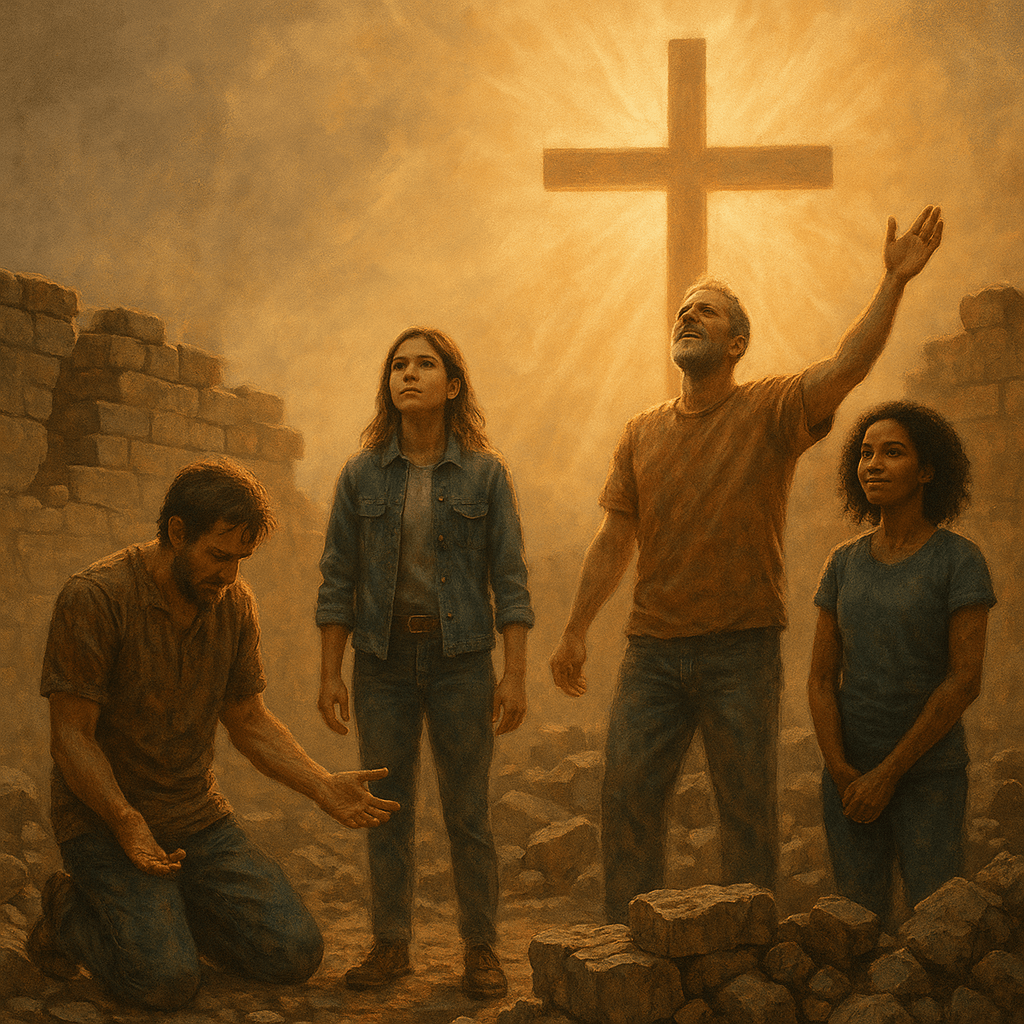
Have we forgotten who we are and why we’re here? In a world increasingly marked by division and pride, this post calls us back to the truth of our identity in Christ. When we remember where we’ve come from and the grace we’ve received, we can tear down the walls between us and love others the way God loves us. It’s time to rediscover our purpose—and live it out with humility, unity, and love.
Author Archives: Ryan Stratton
You Are the Light: How Christians Can Impact the World
The content emphasizes the importance of small acts of kindness and faith in a world filled with chaos and despair. It highlights biblical figures who made significant impacts despite their doubts, urging Christians to accept their roles as difference-makers. Each small action contributes to hope, encouraging believers to serve and spread love in their communities.
A Call for Love and Compassion
A heartfelt Christian reflection on the state of our nation, the fear driving our division, and the urgent call to repentance, healing, and love through Jesus Christ.
The Gospel Keeps Moving Forward (Acts 28:17-31)
The Book of Acts highlights the pivotal role of the Holy Spirit in guiding and empowering early Christians, especially through the journey of Paul. The narrative reflects on overcoming hardships and embracing hope. While Acts concludes abruptly, it signifies that God’s mission continues, inviting believers to be part of the ongoing story of transformation.
Bringing Them In (Acts 15:6-21)
Reformation Day, celebrated on October 31, marks Martin Luther’s pivotal Ninety-Five Theses in 1517, igniting a transformative movement within Christianity. This led to greater access to Scriptures, worship in native languages, and a theological shift towards inclusivity. The early Church grappled with the balance between tradition and embracing all believers through grace, emphasizing the importance of welcoming everyone without barriers.
Sent out With Power (Acts 13:1-12)
The narrative begins with a personal incident involving a car battery issue, leading to a discussion on the importance of the Church being powered by the Holy Spirit. It emphasizes the significance of different roles within the Church, like apostles and teachers, and how they collaboratively support God’s mission, drawing on Paul and Barnabas’ example of outreach and empowerment.
Vision for Mission (Acts 10:9-23)
The Book of Acts details the extraordinary growth of early Christianity through miracles, conversions, and the power of the Holy Spirit. Key events include the conversion of Peter and his interaction with the Gentile Cornelius, emphasizing the breaking of societal barriers. The narrative highlights transformation, unity, and the ongoing impact of faith.
Conversion (Acts 9)
The passage discusses the conversion of Saul (Paul) and emphasizes the transformative power of engaging with Scripture from a fresh perspective. It highlights that conversion is an ongoing process initiated by God, impacting not only the individual but those around them. The narrative showcases Saul’s journey of faith and the pivotal moments following his conversion.
United with Christ (Acts 2)
The early Church’s remarkable growth stemmed from its complete devotion to Jesus and unwavering faithfulness to truth, avoiding cultural compromises. Unlike modern trends focused on entertainment for attracting crowds, genuine transformation arises from obedience to the Holy Spirit. Unity in mission, not uniformity, exemplifies Christ’s power through believers today.
Timing (Acts 1)

The early Church’s growth, as depicted in the Book of Acts, begins with a small group but transforms into a global movement through the Holy Spirit’s power. Patience and divine timing are key themes, as believers learn to wait on God while engaging in their mission to spread the Gospel.
 R Y A N S T R A T T O N